01
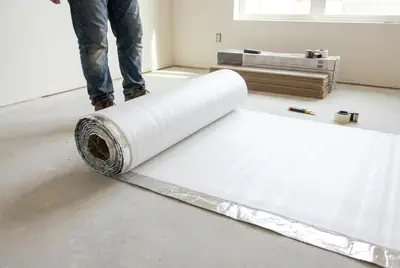
Underlayment and vapor film
The quiet half of a quiet floor: foam or fiber underlay with taped seams, plus a moisture film wherever concrete sits below.

From city apartments to farmhouse hallways, our Vermont crews lay laminate over leveled subfloors and finish every doorway before they leave.
Measured square-foot quote, free, answered within one business day.
Are you tired of staring at those worn out wooden boards under your feet? Luckily, upgrading your interior ground surfaces brings a fresh vibe to your whole house without costing a fortune.
Now, let us dive into the wonderful world of modern click lock ground coverings. This clever material gives you the rich look of exotic timber while keeping your wallet very happy.
Through this comprehensive guide, you will learn why hiring a dedicated local craftsperson makes all the difference. Get ready to turn your boring rooms into showstoppers.
When you start shopping for house upgrades, durability ranks at the very top of your priority list. This amazing synthetic product stands up to heavy foot traffic like an absolute champion.
Furthermore, maintenance becomes an absolute breeze once the job finishes completely. Spills wipe up in seconds because the protective wear layer stops moisture from soaking underneath.
Eventually, you will save countless hours on cleaning duties throughout the week. This frees up your precious weekend time for hobbies you actually enjoy doing.
On top of that, families with pets and playful children benefit immensely from this resilient choice. Claws and toys rarely leave a mark on these tough planks.
Consequently, your investment keeps looking brand new for many years down the road. Which means you can stop stressing about premature replacement costs popping up unexpectedly.
Besides being tough, the visual appeal matches almost any interior design style you prefer. Modern minimalist spaces and rustic country homes both look incredible with these designs.
Therefore, you never have to sacrifice beauty for practicality in busy household zones. Every single room gains instant warmth and cozy styling.
Many homeowners think laying down these synthetic planks is a simple weekend DIY project. However, skipping professional help often leads to annoying gaps and buckling boards.
First off, a skilled installer inspects your subfloor for moisture and uneven spots. This critical step ensures your brand new surface stays flat and secure forever.
Without this careful preparation, your beautiful new floors might start squeaking or separating prematurely. Fixing those amateur mistakes later on costs way more money than hiring pros initially.
Additionally, expert tradespeople bring specialized cutting tools and moisture barriers to every job site. This lets you relax while the messy work gets handled safely.
Beyond that, professional layout planning reduces material waste significantly during the cutting phase. You only buy what you need without throwing away extra boxes of planks.
Speaking of tools, tapping blocks and pull bars require a delicate touch to avoid edge chipping. Pros know the exact pressure needed for every interlocking seam.
As a result, your expansion gaps remain hidden neatly beneath stylish baseboard mouldings. Every corner looks crisp, clean, and expertly finished.
Before any planks touch the ground, your subfloor needs a thorough evaluation for flatness. Moisture issues can ruin synthetic wood materials from the bottom up if ignored.
Because of this, contractors use high tech hygrometers to measure humidity levels accurately. This lets you avoid nasty mold surprises hiding beneath your brand new decor.
Calculating the exact square footage of your rooms prevents running short mid project. Professional estimators measure tricky angles and closets with absolute precision.
This careful approach ensures you order the right amount of transition strips and underlayment. You never have to worry about mismatched dye lots from delayed reorders.
Choosing the right ground covering involves weighing several popular materials against your daily lifestyle needs. Let us look at how synthetic click systems stack up against traditional hardwood.
Traditional wood scratches easily and demands pricey refinishing every few years to stay nice. Meanwhile, synthetic laminate resists daily wear with zero sanding required.
Another factor to consider is resistance to temperature fluctuations and humidity changes across seasons. Solid timber expands and contracts wildly, whereas composite planks remain remarkably stable.
| Material Type | Average Cost | Durability | Maintenance Level |
|---|---|---|---|
| Solid Hardwood | High | Moderate | High Maintenance |
| Synthetic Click Plank | Affordable | Very High | Low Maintenance |
| Standard Carpet | Low | Low | Very High Maintenance |
Looking at the table above helps you see why synthetic planks win on value. Your budget stretches further while giving you maximum performance in high traffic zones.
Furthermore, allergy sufferers love these smooth surfaces because they trap zero dust mites. Cleaning up pet dander takes mere moments with a simple microfiber mop.
Finding a trustworthy local professional in this stunning Northeast state requires a bit of research. You want someone who treats your property with genuine respect and care.
Always ask potential service providers about their past experience with floating floor systems. Checking references gives you peace of mind before signing any agreements.
In regions experiencing population shifts and varying demographics, local contractors understand regional weather impacts. Homes here face freezing winters and humid summers that test building materials.
Therefore, hiring someone familiar with local housing quirks prevents unexpected installation headaches later. They know how to handle drafty older farmhouses and modern builds alike.
Besides local expertise, transparent pricing separates honest contractors from shady operators out there. You deserve clear estimates with zero hidden fees popping up on final invoices.
Reputable local pros are always happy to walk you through every line item on paper. This openness builds trust and ensures everyone stays on the same page.
Upgrading your interior surfaces represents a solid investment in your overall property equity. Potential buyers love walking into homes featuring updated, flawless walking planes.
While upfront costs matter, think about the decades of stress-free living you gain. Cheap materials wear out fast and force you to repeat the messy process soon.
Instead, investing in quality products installed by certified pros pays dividends every single day. Your rooms look stunning, your feet feel supported, and your chores become lighter.
Plus, local contractors often provide warranties on their craftsmanship to protect your financial commitment. If anything shifts out of place, they return to fix it promptly.
Now is the ideal moment to upgrade those tired old carpets in your hallways. Take control of your home aesthetics and enjoy a completely revitalized living environment.
Are you finally ready to ditch those dated carpets and scratched tiles for good? Contact our friendly local team today to discuss your upcoming home transformation project.
We provide completely transparent consultations and detailed project plans tailored to your specific household needs. You will receive honest advice without any high pressure sales tactics involved.
Remember that scheduling a consultation puts you under zero obligation to buy right away. Get your questions answered by seasoned pros who genuinely care about your satisfaction.
Stop putting off your dream home improvements and start enjoying your living spaces more. Request your free quote right now and let us bring your vision to life.
Every laminate plank carries an abrasion class. It says more about how the floor will age than the photo on the box does, so we quote with it, not around it.
| Rating | Where it belongs | What it takes in stride |
|---|---|---|
| AC3 | Bedrooms, closets, home offices with a chair mat | Everyday footsteps, furniture on felt pads, the vacuum on Sundays |
| AC4 | Living rooms, kitchens, hallways, stair landings | Kids, dogs, dropped keys, the daily route between couch and fridge |
| AC5 | Entryways, home businesses, rentals, busy stairs | Grit walked in from outside, rolling office chairs, tenants you never meet |
AC1 and AC2 exist too; we simply do not lay them, because the savings at the register come back as dull traffic lanes within a couple of years.
We install laminate all day, and it is still not the answer to every room. Here is the comparison we walk through at the kitchen table, with nothing rounded in our favor.
| Laminate | Vinyl plank | |
|---|---|---|
| Water | Modern boards shrug off spills that get wiped up; standing water at a leaky dishwasher is still its weak spot. | Fully waterproof through the core, which is why laundry rooms and full bathrooms lean vinyl. |
| Comfort and sound | Stiffer core, more solid underfoot, and quieter than its reputation once a proper underlay goes in. | Softer and warmer to bare feet, but thin planks telegraph every dip in the subfloor. |
| Price | More floor per dollar at the same thickness, and the realistic wood looks start cheaper. | Comparable at the low end; the rigid-core boards worth owning cost noticeably more. |
| Repair | A click-lock plank can be swapped; keep one spare box in the garage and a scratch is an afternoon fix. | Glued-down planks mean solvent and patience; click vinyl swaps much like laminate does. |
If your project reads vinyl after that table, we will say so during the measure and you keep the comparison for free.
01
The quiet half of a quiet floor: foam or fiber underlay with taped seams, plus a moisture film wherever concrete sits below.
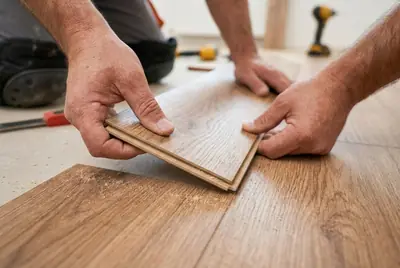
02
Planks angled, clicked and tapped home with staggered joints, so the sight line down the room stays dead straight.
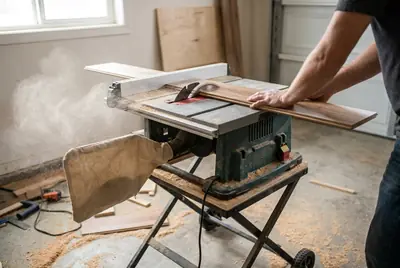
03
Door casings undercut so boards slide beneath, pipes ringed with collars, last rows ripped to width instead of forced.
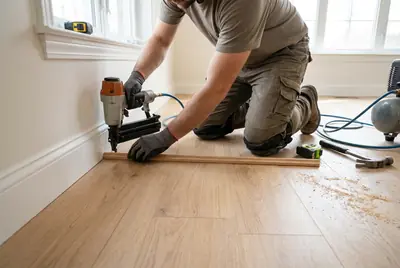
04
The expansion gap disappears behind clean trim, mitered at the corners and caulked where the wall waves.
05
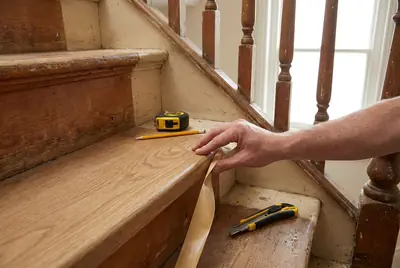
Tread and riser kits with proper nosing, glued and screwed, because a stair takes more abuse than any floor below it.
06
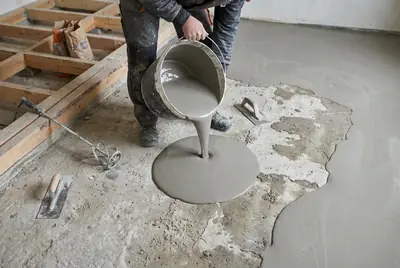
Grinding the high spots and pouring self-leveler into the low ones before a single plank leaves its box.
Laminate floats. It is not nailed and not glued, which is exactly why it goes down fast, and exactly why it copies every flaw underneath. A hollow click under your heel, a seam that opens by the window, a plank that rocks by the couch: nine times out of ten the story started below the boards.
So the level comes out before the saw does. We check flatness against the 3/16 inch in 10 feet rule, grind ridges, fill dips with self-leveling compound and let it cure. The underlay then earns its keep twice over, softening footfall sound for the room below and evening out what the compound did not catch.
The last quiet detail is the gap you will never see. Laminate grows and shrinks with the seasons, so every wall, pipe and doorway keeps a small expansion space, and long open stretches get a transition profile. Skip those and summer humidity will fold a hallway into a tent; leave them and the floor stays flat for decades. They are in every quote we write, not on the options list.
A fitter walks the rooms with a laser measure, checks the subfloor and leaves you a square-foot price on paper. No estimate ranges that grow later.
The planks acclimate in the rooms for about 48 hours while we pull the old covering and level whatever the laser flagged.
Underlay, film, then row after row, clicked tight and cut clean at every casing. Most single floors go down between breakfast and dinner.
Baseboards, thresholds, a vacuum pass and a walk through every room together. You keep the leftover planks for future repairs.
| Line item | Usual range | What sits inside it |
|---|---|---|
| Laminate installation, per sqft | $2.50 - $4.50 | Labor for click-lock laying with standard underlay included. |
| Old floor removal, per sqft | $0.60 - $1.50 | Carpet pulls out cheap; glued wood and tile sit at the top end. |
| Subfloor leveling, per sqft treated | $1.00 - $3.00 | Only the flagged low spots pay, never the whole room. |
| Stairs, per step | $45 - $95 | Tread, riser and nosing, fitted, glued and screwed. |
| Baseboard and quarter round, per linear foot | $2.00 - $4.00 | Supplied primed or color-matched to the boards. |
| Small-job minimum | $350 | Keeps a single hallway or one bedroom fair for both sides. |
The planks themselves ride on top of these figures and depend on the board you fall for; the written quote lists them on their own line, so you can swap styles without redoing the math.
Bedrooms, living rooms, hallways and home offices are laminate country, no caveats: warm looks, an AC rating matched to the traffic and a surface that forgives chair legs and dog claws better than the veneer floors it imitates.
Kitchens work well with a water-resistant board, sealed edges and a mat where the sink drips. Full bathrooms are the one room where we tap the brakes: daily steam and puddled water shorten any laminate's life, and we would rather point you to a different surface there than sell you a floor with a countdown on it. Powder rooms, with no tub in sight, are fine.
The moment the last plank clicks. A floating floor needs no glue to cure, so the couch returns the same evening and the bedroom sleeps in its own bed that night. Heavy aquariums and pianos get felt pads and a second pair of hands, not a waiting period.
Planks leave a cold warehouse and arrive in your heated rooms. Two days of acclimating lets them finish their expanding before they are locked together, instead of after, which is how gaps and peaks are born.
Usually, and it saves the demolition line on the quote. The grout lines disappear under the underlay if the tile is flat and sound. Over carpet the answer is always no; the padding flexes and the locks work themselves open.
We work room by room, shifting pieces to the finished side as the floor advances, so nobody rents a storage unit for a two-day job. Emptying closets and small breakables ahead of us is the one favor we ask.
No. A flat subfloor with an 8 mm AC4 board outlives a wavy one with 12 mm every time. Thickness buys sound and feel; the AC rating buys longevity; the leveling buys both. We spend your budget in that order.
You hand us the spare box we left behind. A click-lock floor unzips to the wounded plank and closes again, and a repair like that is an afternoon, not a renovation.
Terrain up here, coverage down there: every community a fitter reaches from this base is linked further down the page.
Somewhere under that carpet is a flat, quiet floor waiting to happen.
Price my floor